The right visual style can make or break a movie poster. It immediately signals genre, sets audience expectations, and creates an emotional response before anyone reads the title.
The Melies Movie Poster Generator offers 20 distinct poster styles. This guide covers each one in detail: what it looks like, what films it evokes, and when to use it.
Quick answer: Melies offers 20 AI movie poster styles: Cinematic, Anime, Retro, Film Noir, Minimalist, Horror, Sci-Fi, Watercolor, Comic Book, Art Deco, Grindhouse, Bollywood, Western, Pixel Art, Surrealist, Documentary, Cartoon, Epic Fantasy, Indie Film, and Neon Noir. Each transforms the same scene prompt into a completely different visual aesthetic with genre-matched typography.
1. Cinematic
The look: Photorealistic, high-production-value imagery. Rich color depth, dramatic lighting, sharp details. The kind of poster you see on billboards for major studio releases.
Films it evokes: Inception, The Dark Knight, Interstellar, Dune. Any big-budget production with polished, photographic poster art.
When to use it: This is your default choice for any drama, action, or thriller that aims for a mainstream, professional look. It works across almost every genre because it emphasizes photorealism and cinematic lighting.
Best prompt approach: Write detailed, realistic scene descriptions. Include lighting cues like "golden hour backlight" or "dramatic side lighting." The Cinematic style amplifies realistic visual details.
2. Anime
The look: Japanese animation aesthetic with bold line work, expressive characters, vibrant colors, and stylized proportions. Large eyes, dynamic poses, detailed backgrounds in the tradition of anime key art.
Films it evokes: Your Name, Spirited Away, Akira, Ghost in the Shell. Studio Ghibli, Makoto Shinkai, and classic anime film posters.
When to use it: Animation projects, stories with fantastical elements, youth-oriented content, or any project where you want the distinct energy and expressiveness of anime visual storytelling.
Best prompt approach: Describe characters with anime conventions in mind. Focus on dramatic poses, expressive emotions, and fantastical settings. Include specific elements like "cherry blossoms," "neon cityscape," or "dramatic wind blowing through hair."
3. Retro
The look: 1960s-70s vintage aesthetic with warm color palettes, slightly faded tones, bold typography sensibility, and a hand-painted quality. Grainy texture, warm oranges and browns, period-appropriate styling.
Films it evokes: Bullitt, The French Connection, Dirty Harry, Chinatown. Think 70s thriller and drama poster art with hand-illustrated character portraits.
When to use it: Period pieces set in the 1960s-70s, stories with a nostalgic tone, throwback projects, or modern films that want a vintage feel. Also great for music documentaries and counterculture stories.
Best prompt approach: Include period-specific details. Mention vintage clothing, classic cars, analog technology. Warm color cues like "amber light" and "faded film stock" reinforce the retro aesthetic.
4. Film Noir
The look: High-contrast black and white with deep shadows, dramatic low-key lighting, and a moody, atmospheric quality. Venetian blind shadows, wet streets reflecting light, cigarette smoke curling in darkness.
Films it evokes: Double Indemnity, The Maltese Falcon, The Third Man, Sunset Boulevard. Classic Hollywood noir from the 1940s-50s.
When to use it: Detective stories, mystery films, psychological thrillers, period pieces set in the 1940s-50s. Any project where moral ambiguity and shadow are central to the story.
Best prompt approach: Think in terms of light and shadow. "Half the face in shadow," "silhouette in a doorway," "streetlight through rain." Noir is about what you almost cannot see.
5. Minimalist
The look: Clean, simple composition with strong graphic design. Limited color palette, generous negative space, bold shapes, and typography-forward design. Less is more.
Films it evokes: Saul Bass poster designs for Vertigo, Anatomy of a Murder, The Man with the Golden Arm. Modern minimalist posters for films like Drive, Under the Skin, Ex Machina.
When to use it: Arthouse films, conceptual projects, or when you want a poster that stands out through simplicity. Particularly effective for social media where clean designs catch the eye in busy feeds.
Best prompt approach: Describe a single strong image or symbol. "A single red balloon against a white sky," "a silhouette walking through a doorway." The simpler your prompt, the stronger the minimalist result.
6. Horror
The look: Dark, unsettling atmosphere with desaturated colors punctuated by specific accent colors (usually red). Eerie lighting, disturbing imagery, a sense of dread in the composition.
Films it evokes: The Exorcist, Hereditary, The Shining, It. Horror posters that make you uncomfortable just looking at them.
When to use it: Horror films, supernatural thrillers, dark fantasy, psychological horror. Any project designed to unsettle, frighten, or disturb.
Best prompt approach: Focus on what creates dread. Partially hidden threats, distorted faces, uncanny imagery. "A child standing at the end of a dark hallway," "a face pressed against frosted glass from the other side." Suggestion is scarier than showing everything.
7. Sci-Fi
The look: Futuristic and technological with cool blue and cyan tones, glowing elements, sleek surfaces, and advanced technology. Holographic interfaces, spaceship interiors, alien landscapes, cyberpunk cityscapes.
Films it evokes: Blade Runner, Star Wars, The Matrix, Tron: Legacy. Science fiction poster art spanning from classic space opera to modern cyberpunk.
When to use it: Science fiction at any scale, from intimate near-future stories to epic space opera. Technology-driven thrillers, cyberpunk, dystopian futures.
Best prompt approach: Include technological and futuristic elements. "Holographic displays," "neon-lit megacity," "space station corridor." Sci-Fi style amplifies anything that reads as futuristic or technological.
8. Watercolor
The look: Soft, painterly quality with visible brushwork, color bleeding, and organic textures. Delicate washes of color, dreamy edges, and an artistic hand-crafted feel that is warm and emotionally expressive.
Films it evokes: The Grand Budapest Hotel (promotional art), Moonrise Kingdom, indie festival posters, illustrated children's film art. Art-house and romantic films with emotional depth.
When to use it: Romantic dramas, coming-of-age stories, emotional character studies, nature-focused narratives, children's films. Any project where softness and emotion take priority over grit and realism.
Best prompt approach: Describe scenes with natural beauty and emotion. "Two figures walking through autumn woods," "a lighthouse on a misty cliff at dawn." Watercolor excels at landscapes, nature, and quiet emotional moments.
9. Comic Book
The look: Bold outlines, halftone dot patterns, strong primary colors, dynamic action poses, speech bubble aesthetics. Pop art influence with high contrast and graphic punch.
Films it evokes: Sin City, Scott Pilgrim vs. the World, Spider-Verse, Kick-Ass. Superhero films and action-comedy with comic book DNA.
When to use it: Superhero films, action-comedy, graphic novel adaptations, anything with heightened reality and visual energy. Works great for projects that do not take themselves too seriously.
Best prompt approach: Describe dynamic action poses and bold compositions. "Hero launching into the air with fist forward," "face split between hero and villain." Comic Book style loves movement, contrast, and visual drama.
10. Art Deco
The look: 1920s-30s geometric glamour with gold and black color schemes, symmetrical compositions, ornate geometric patterns, and elegant typography. Luxury, opulence, and architectural precision.
Films it evokes: The Great Gatsby, Metropolis, Fantastic Beasts, Babylon. The golden age of cinema and jazz age aesthetics.
When to use it: Period pieces set in the 1920s-30s, stories about wealth and excess, films with architectural grandeur, any project where elegance and geometric precision suit the narrative.
Best prompt approach: Include architectural and geometric elements. "Grand ballroom with geometric ceiling," "city skyline with art deco skyscrapers." Mention gold, black, and symmetry. Art Deco thrives on pattern and precision.
11. Grindhouse
The look: Exploitation film aesthetic with scratched and damaged film texture, oversaturated colors, bold provocative typography, and deliberately rough, low-budget quality. VHS tracking lines, print imperfections, lurid colors.
Films it evokes: Planet Terror, Death Proof, Machete, Hobo with a Shotgun. 1970s exploitation cinema and modern tributes to the genre.
When to use it: Action films with retro-exploitation energy, genre mashups, projects with an irreverent or subversive tone, midnight movie aesthetics. Great for projects that embrace the B-movie spirit.
Best prompt approach: Go bold and provocative. "Tough character holding a weapon, flames in the background," "car chase through a desert highway." Grindhouse rewards excess and attitude.
12. Bollywood
The look: Vibrant, ornate, and maximalist. Rich saturated colors, elaborate costume details, multiple character compositions, decorative borders, and a sense of spectacle and emotion. Gold accents, floral patterns, and dramatic poses.
Films it evokes: Classic and modern Bollywood cinema: Devdas, Baahubali, Padmaavat, RRR. The grand tradition of Indian film poster art.
When to use it: Musical dramas, epic romance, stories with cultural richness and visual opulence, large ensemble casts, celebrations of love and heroism.
Best prompt approach: Describe rich visual details. "Characters in elaborate traditional clothing," "grand palace backdrop with ornate architecture," "dramatic dance pose." Bollywood style celebrates beauty, emotion, and visual abundance.
13. Western
The look: Dusty, sun-baked textures with earth tones, leather, and rugged landscapes. Wide desert horizons, weathered typography, and the visual language of frontier storytelling. Warm sunset colors, vast skies, sparse vegetation.
Films it evokes: The Good, the Bad and the Ugly, Unforgiven, No Country for Old Men, True Grit. Classic and neo-western cinema.
When to use it: Westerns (obviously), but also modern frontier stories, road movies through desolate landscapes, stories of isolation and survival in harsh environments.
Best prompt approach: Describe vast landscapes and rugged characters. "Lone rider on horseback against an endless desert sunset," "weathered face under a wide-brimmed hat, dust storm approaching." Western style loves the contrast between vast space and solitary figures.
14. Pixel Art
The look: Retro 8-bit and 16-bit game aesthetic with visible pixels, limited color palettes, and nostalgic digital craftsmanship. Chunky characters, blocky environments, and the charm of early video game art.
Films it evokes: Wreck-It Ralph, Ready Player One, Tron (original). Gaming culture and retro-digital nostalgia.
When to use it: Gaming-related films, nostalgia projects, tech-themed stories, anything targeting audiences who grew up with 8-bit and 16-bit games. Also works as a distinctive, attention-grabbing choice for any genre.
Best prompt approach: Describe scenes in simple, iconic terms. "Knight facing a dragon in a castle courtyard," "spaceship flying through an asteroid field." Pixel Art reduces everything to its essential shapes, so clear, iconic imagery works best.
15. Surrealist
The look: Dreamlike, impossible scenes that defy physics and logic. Melting objects, impossible architecture, unexpected scale relationships, and visual metaphors made literal. Inspired by Salvador Dali, Rene Magritte, and the surrealist art movement.
Films it evokes: Eternal Sunshine of the Spotless Mind, Mulholland Drive, Pan's Labyrinth, Being John Malkovich. Films that blur the line between reality and imagination.
When to use it: Psychological dramas, dream sequences, stories about memory and perception, fantasy that blends with reality, experimental and avant-garde projects.
Best prompt approach: Describe impossible or dreamlike imagery. "A staircase that loops back on itself over an ocean," "a giant clock melting over a desert landscape," "a door opening into a room that contains the same door." Surrealist style rewards creativity and visual paradox.
16. Documentary
The look: Clean, editorial photography with naturalistic lighting and honest compositions. Slightly desaturated colors, journalistic framing, and a sense of real-world authenticity. Clean typography, factual presentation.
Films it evokes: An Inconvenient Truth, Free Solo, 13th, Won't You Be My Neighbor? Documentary and non-fiction film poster art that communicates seriousness and importance.
When to use it: Documentaries, biographical films, issue-driven narratives, true crime, historical projects. Any project where authenticity and credibility are more important than style.
Best prompt approach: Describe real-world scenarios and people. "Activist speaking at a podium, crowd behind them," "scientist working in a lab, data screens in background." Documentary style favors honest, straightforward compositions.
17. Cartoon
The look: Animated feature style with rounded shapes, bright saturated colors, exaggerated expressions, and friendly, accessible character designs. Think Pixar, Disney, and modern Western animation.
Films it evokes: The Incredibles, Shrek, Toy Story, Zootopia. Western animated feature films and family entertainment.
When to use it: Family films, animated features, children's content, comedies with a light-hearted tone, any project targeting a general or family audience.
Best prompt approach: Describe characters and scenes with fun and energy. "A group of mismatched animal friends on an adventure," "a young inventor surrounded by wacky gadgets in a colorful workshop." Cartoon style amplifies personality and expression.
18. Epic Fantasy
The look: Sweeping, grand, and magical. Vast landscapes with impossible architecture, dramatic skies, armies and kingdoms, ancient ruins, and mythical creatures. Rich, saturated colors with golden and ethereal lighting.
Films it evokes: Lord of the Rings, Harry Potter, Game of Thrones, The Chronicles of Narnia. High fantasy with scale, wonder, and mythic grandeur.
When to use it: Fantasy adventure, sword and sorcery, mythological stories, any project with magical worlds, epic quests, or legendary conflicts.
Best prompt approach: Think big. "A fortress carved into a mountain face, armies gathered on the plain below, storm clouds and lightning," "a wizard standing at the edge of an ancient bridge over an endless chasm." Epic Fantasy rewards scale and grandeur.
19. Indie Film
The look: Muted, artistic aesthetic with desaturated colors, natural lighting, and understated compositions. Intimate framing, contemplative mood, and a visual honesty that values authenticity over spectacle. Often features soft natural light and everyday settings.
Films it evokes: Lost in Translation, Moonlight, Lady Bird, Aftersun. Independent cinema that prioritizes character and mood over plot and spectacle.
When to use it: Character dramas, coming-of-age stories, intimate relationship films, festival-targeted projects. Any film where quiet emotion matters more than visual fireworks.
Best prompt approach: Describe intimate, quiet moments. "A woman sitting alone by a window, soft afternoon light on her face," "two people walking along an empty beach at dusk." Indie Film style excels at contemplative, emotionally resonant imagery.
20. Neon Noir
The look: Rain-soaked streets reflecting neon signs, deep shadows pierced by vivid pink, blue, and purple light. Modern noir aesthetic with cyberpunk influence. Dark, atmospheric, and visually striking with strong color contrast against darkness.
Films it evokes: Drive, Blade Runner 2049, Collateral, John Wick, Nightcrawler. Modern thrillers and neo-noir with a distinctly contemporary visual palette.
When to use it: Neo-noir thrillers, crime dramas set in modern cities, cyberpunk stories, anything set at night in urban environments. Perfect for projects with a stylish, moody, contemporary edge.
Best prompt approach: Set your scene at night in a city. "A figure standing in a rain-soaked alley, pink neon sign reflected in puddles," "a car parked under a flickering blue neon light, driver's face half-visible." Neon Noir is about darkness punctuated by vivid, artificial light.
Quick Reference: Style by Genre
| Genre | Primary Style | Alternative Styles |
|---|---|---|
| Action | Cinematic | Comic Book, Grindhouse |
| Horror | Horror | Film Noir, Neon Noir, Surrealist |
| Romance | Watercolor | Indie Film, Cinematic |
| Sci-Fi | Sci-Fi | Neon Noir, Minimalist |
| Fantasy | Epic Fantasy | Watercolor, Anime |
| Thriller | Film Noir | Neon Noir, Cinematic |
| Comedy | Cartoon | Retro, Comic Book |
| Drama | Cinematic | Indie Film, Documentary |
| Western | Western | Grindhouse, Retro |
| Musical | Bollywood | Art Deco, Retro |
| Animation | Anime | Cartoon, Pixel Art |
| Documentary | Documentary | Minimalist, Indie Film |
| Arthouse | Surrealist | Minimalist, Indie Film |
| Period (1920s) | Art Deco | Retro, Film Noir |
| Period (1970s) | Retro | Grindhouse, Western |
| Cyberpunk | Neon Noir | Sci-Fi, Pixel Art |
Tips for Choosing the Right Style
Match the Emotional Tone
The style should amplify your story's emotional core:
- Dark, serious stories - Film Noir, Horror, Neon Noir
- Light, fun stories - Cartoon, Comic Book, Retro
- Emotional, intimate stories - Watercolor, Indie Film
- Grand, epic stories - Cinematic, Epic Fantasy, Bollywood
- Weird, experimental stories - Surrealist, Pixel Art, Grindhouse
Consider Your Audience
Different styles signal different audiences:
- Mainstream/broad - Cinematic, Cartoon, Epic Fantasy
- Genre fans - Horror, Sci-Fi, Western, Film Noir
- Film enthusiasts - Indie Film, Minimalist, Surrealist
- Young/digital-native - Anime, Pixel Art, Neon Noir, Comic Book
Test Multiple Styles
The same prompt can look dramatically different across styles. Generate 2-3 versions with different styles to find the best match. A scene that feels flat in Cinematic style might come alive in Neon Noir or Surrealist.
What to Try Next
- Movie Poster Generator - Start creating posters
- How to Create an AI Movie Poster
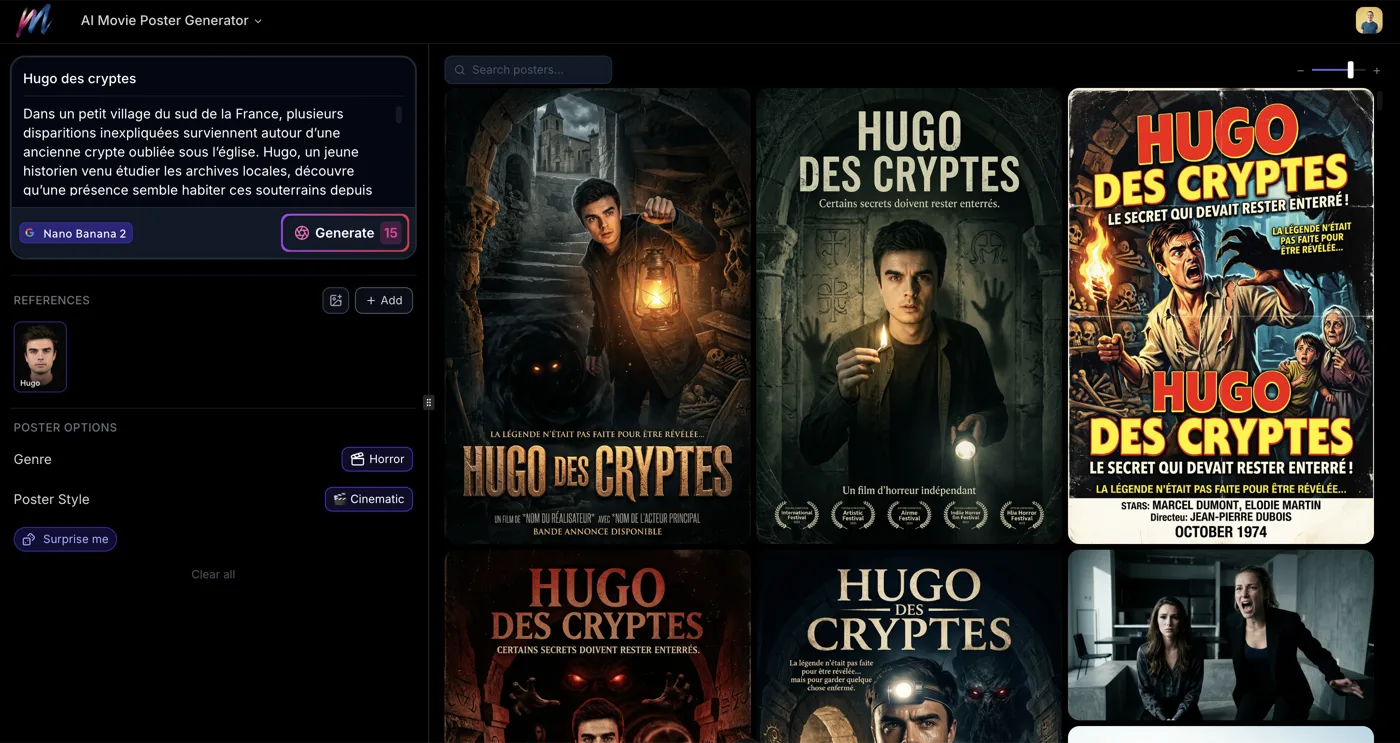 Movie Poster Generator: Create AI Movie Posters in MinutesUse the Melies movie poster generator to create professional AI movie posters. Choose from 20 styles, add titles and taglines, and generate stunning posters in minutes. - Step-by-step guide
 - How to Generate Movie Ideas
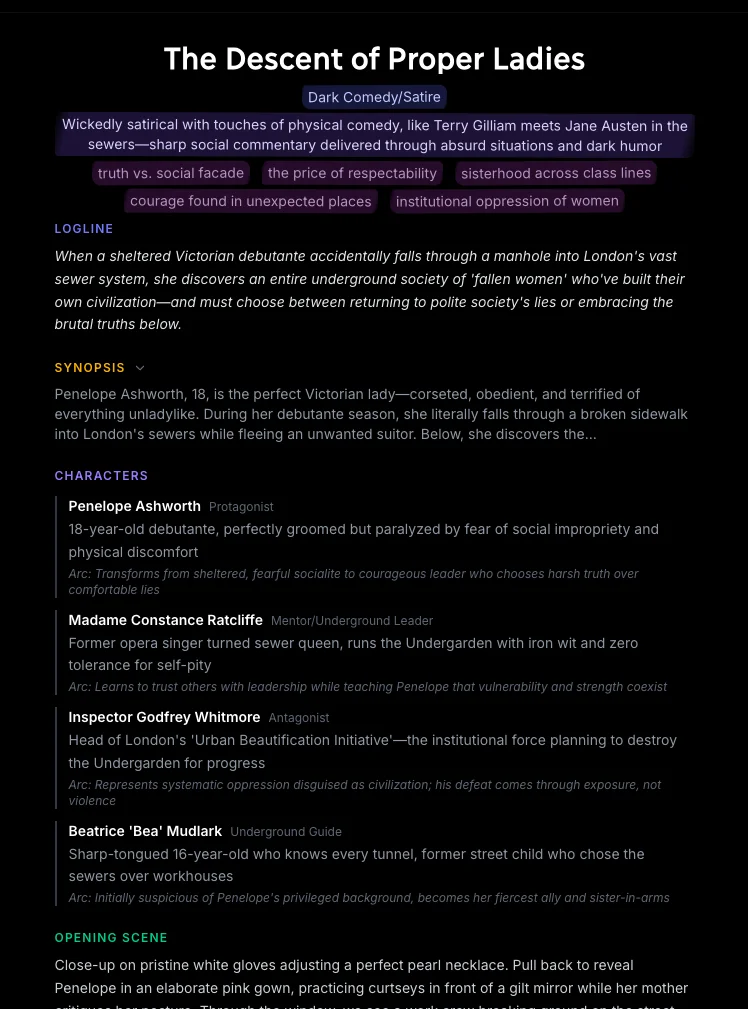 How to Generate Movie Ideas with AIUse the Melies Movie Idea Generator to create original film concepts. Step-by-step guide through the 9-step wizard covering archetypes, tone, characters, and themes. - Get story ideas for your posters
 - AI Image Styles Guide
 AI Image Styles: Camera Angles, Lighting, Color Grading & MoreExplore all 11 AI image style categories in Melies including camera angles, lighting presets, color grades, art styles, moods, and more for cinematic visual storytelling. - Browse all visual styles across Melies