

Every great film follows a pattern. Not a rigid formula, but a deep structural rhythm that audiences instinctively recognize and respond to. Understanding these patterns is one of the most valuable skills a filmmaker can develop.
Blake Snyder identified 10 fundamental story archetypes in his Save the Cat! screenwriting method. These archetypes describe the underlying shape of stories, and nearly every successful film fits one of them.
This guide covers all 10 archetypes with classic film examples, explains what makes each one work, and shows how the Melies Movie Idea Generator uses them to help you create original film concepts.
Quick answer: The 10 Save the Cat story archetypes are: Monster in the House (survival horror like Jaws), Golden Fleece (journey quests like Lord of the Rings), Out of the Bottle (wish fulfillment like Groundhog Day), Dude with a Problem (ordinary hero like Die Hard), Rites of Passage (life transitions like Lady Bird), Buddy Love (transformative relationships like Toy Story), Whydunit (mysteries like Knives Out), Fool Triumphant (underdog victories like Legally Blonde), Institutionalized (individual vs. system like Shawshank), and Superhero (special destiny like Spider-Man). The Melies Movie Idea Generator uses all 10 as the foundation of its free story wizard.
1. Monster in the House
The pattern: A monster (literal or figurative) is unleashed in a confined space. Characters must survive or destroy the threat.
Three essential elements:
- A monster - a threat that is powerful and terrifying
- A house - a confined space the characters cannot easily leave
- A sin - someone did something wrong to create or unleash the monster
Why It Works
The confined space creates claustrophobia and escalating tension. The audience knows the characters cannot simply run away. The "sin" element adds moral weight - this is not random bad luck, someone is responsible.
Classic Examples
| Film | Monster | House | Sin |
|---|---|---|---|
| Jaws | The shark | Amity Island (beach town dependent on tourism) | Mayor ignores warnings to keep beaches open |
| Alien | The xenomorph | The Nostromo spaceship | Company secretly sent crew to retrieve the alien |
| A Quiet Place | Sound-hunting creatures | The family's rural property | (Implied) humanity's arrogance |
| The Shining | The Overlook Hotel itself / Jack | The snowbound hotel | Jack's alcoholism and violent tendencies |
| Get Out | The Armitage family | Their estate | Racism disguised as liberalism |
Making It Your Own
The "monster" does not have to be a literal creature. In Get Out, the monster is systemic racism. In The Shining, the monster is addiction and rage. The "house" does not have to be a literal house - it is any situation the characters cannot escape.
2. Golden Fleece
The pattern: A hero goes on a journey (physical, spiritual, or both) to find something. Along the way, they discover what they truly needed was not the thing they set out to find.
Three essential elements:
- A road - a journey that structures the narrative
- A team - companions who join or challenge the hero
- A prize - what the hero thinks they want vs. what they actually need
Why It Works
The journey structure gives the story natural forward momentum. Each stage of the journey tests the hero differently. The gap between what they want (the prize) and what they need (internal growth) creates satisfying character development.
Classic Examples
| Film | Road | Team | Prize (Want vs. Need) |
|---|---|---|---|
| Lord of the Rings | Journey to Mount Doom | The Fellowship | Destroy the ring / Find courage and friendship |
| Finding Nemo | Ocean crossing to Sydney | Dory, sea creatures | Find Nemo / Learn to let go and trust |
| Mad Max: Fury Road | Road across the wasteland | Furiosa and the wives | Reach the Green Place / Find redemption |
| The Wizard of Oz | Yellow Brick Road to Oz | Scarecrow, Tin Man, Lion | Get home / Discover what home really means |
| Up | Journey to Paradise Falls | Russell, Dug, Kevin | Honor Ellie's dream / Find a new purpose in life |
Making It Your Own
The "road" can be metaphorical. A character navigating a complex social hierarchy is on a journey. A scientist working through a research problem is on a quest. The key is that movement toward a goal reveals character.
3. Out of the Bottle
The pattern: A character receives a wish, power, or magical gift. Initially it seems wonderful, but complications arise. The character must learn the lesson the gift is teaching them.
Three essential elements:
- A wish - something that changes the rules of ordinary life
- A spell - the mechanism that makes the wish come true
- A lesson - what the character learns by getting what they thought they wanted
Why It Works
We all fantasize about having powers or getting wishes. This archetype lets us live vicariously through the character while also learning why the wish is not the answer. The comedy (or tragedy) comes from watching someone navigate an extraordinary situation with ordinary limitations.
Classic Examples
| Film | Wish | Spell | Lesson |
|---|---|---|---|
| Groundhog Day | Phil keeps reliving the same day | Unexplained time loop | Selflessness and genuine human connection |
| Liar Liar | Fletcher cannot lie for 24 hours | Son's birthday wish | Honesty matters more than winning |
| Freaky Friday | Mother and daughter swap bodies | Fortune cookie magic | Understanding and empathy for each other |
| Big | Josh becomes an adult | Carnival fortune machine | Childhood has its own value |
| Bruce Almighty | Bruce gets God's powers | God grants them | Humility and accepting what you cannot control |
Making It Your Own
The "wish" does not have to be literal magic. A sudden inheritance, an unexpected promotion, instant fame - anything that gives a character something they wanted without earning it can be an Out of the Bottle story.
4. Dude with a Problem
The pattern: An ordinary person is thrown into an extraordinary, life-threatening situation. They must use their ordinary skills in extraordinary ways to survive.
Three essential elements:
- An innocent hero - someone who did not ask for this
- A sudden event - something that disrupts normal life violently
- A life or death situation - the stakes could not be higher
Why It Works
The audience immediately identifies with an ordinary person because we are all ordinary people. When that person faces extraordinary danger, we project ourselves into the situation: "What would I do?" The combination of relatable character and extreme stakes creates maximum engagement.
Classic Examples
| Film | Innocent Hero | Sudden Event | Life or Death |
|---|---|---|---|
| Die Hard | John McClane (cop at a party) | Terrorists seize the building | Hostages will be killed |
| The Martian | Mark Watney (botanist) | Stranded on Mars | Running out of food, oxygen, and time |
| Taken | Bryan Mills (retired agent) | Daughter kidnapped | She will be sold into trafficking |
| 127 Hours | Aron Ralston (hiker) | Arm trapped by boulder | Will die of dehydration |
| Titanic | Jack and Rose (passengers) | Ship hits iceberg | Ship is sinking |
Making It Your Own
The "ordinary person" part is crucial. If your hero is already a superhero when the problem starts, it is a Superhero story, not a Dude with a Problem. The power of this archetype comes from the mismatch between the hero's normal capabilities and the extraordinary situation.
5. Rites of Passage
The pattern: A character goes through a universal life experience - growing up, aging, addiction, divorce, grief - and is transformed by it. The story is about the internal change more than external events.
Three essential elements:
- A life problem - a universal human experience everyone faces
- A wrong way - the character initially handles it badly
- A acceptance - the character finally accepts the truth and grows
Why It Works
These stories resonate because every audience member has faced (or will face) the same experiences. The "wrong way" phase creates dramatic tension and empathy - we have all handled a life transition badly. The acceptance creates catharsis.
Classic Examples
| Film | Life Problem | Wrong Way | Acceptance |
|---|---|---|---|
| Lady Bird | Growing up and leaving home | Rejecting her mother and hometown | Appreciating where she came from |
| Boyhood | Growing up (literally) | Various mistakes of youth | Embracing the present moment |
| The Breakfast Club | Adolescent identity crisis | Hiding behind stereotypes | Seeing each other as real people |
| Manchester by the Sea | Grief and guilt | Emotional shutdown, refusing to feel | Acknowledging he cannot fully heal, but choosing to live |
| Inside Out | A child processing sadness | Joy trying to suppress Sadness | Understanding that sadness is necessary |
Making It Your Own
The key to a great Rites of Passage story is honesty. Do not romanticize the struggle or rush the resolution. These stories work because they take the painful, messy reality of human experience seriously.
6. Buddy Love
The pattern: Two characters who are incomplete alone find each other. Their relationship (romantic, platonic, professional) transforms them both, but only after overcoming the thing that keeps them apart.
Three essential elements:
- An incomplete hero - someone missing something in their life
- A counterpart - someone who has what the hero lacks (and vice versa)
- A complication - the thing keeping them apart (personality clash, social barrier, misunderstanding)
Why It Works
We are social beings who define ourselves through relationships. Watching two characters transform each other is deeply satisfying. The complication creates tension and the resolution creates joy.
Classic Examples
| Film | Incomplete Hero | Counterpart | Complication |
|---|---|---|---|
| Toy Story | Woody (feels replaced) | Buzz (does not know he is a toy) | Jealousy and misunderstanding |
| Thelma & Louise | Thelma (trapped in marriage) | Louise (hiding from her past) | They are on the run from the law |
| Good Will Hunting | Will (brilliant but closed off) | Sean (grieving but wise) | Will's fear of intimacy and vulnerability |
| When Harry Met Sally | Harry (cynical about love) | Sally (romantic optimist) | Can men and women be friends? |
| Rush | Hunt (instinct, reckless) | Lauda (precision, cautious) | Intense rivalry that is actually mutual need |
Making It Your Own
"Love" does not mean romance. Buddy Love covers friendships, mentor-student relationships, professional partnerships, even nemesis dynamics. The core is two people who are better together than apart.
7. Whydunit
The pattern: A mystery or crime draws someone into investigation. As they dig deeper, they uncover not just who did it but why, and the "why" reveals uncomfortable truths about society, human nature, or themselves.
Three essential elements:
- A detective - someone compelled to find the truth (professional or amateur)
- A secret - what is really going on beneath the surface
- A dark turn - the truth is worse or more complex than expected
Why It Works
Humans are wired for puzzle-solving. The Whydunit gives us a mystery to solve alongside the detective, but the real payoff is not the "who" but the "why." The dark turn makes these stories linger because the truth challenges our assumptions.
Classic Examples
| Film | Detective | Secret | Dark Turn |
|---|---|---|---|
| Knives Out | Blanc (hired detective) | Family greed and manipulation | The "victim" orchestrated his own death |
| Zodiac | Graysmith (cartoonist turned obsessive) | The killer's identity | The obsession destroys Graysmith's life |
| Gone Girl | Nick (accused husband) | Amy's elaborate plan | Marriage as a dark game of control |
| Chinatown | Gittes (private eye) | Water theft conspiracy | Systemic corruption, the powerful get away with it |
| Parasite | The Kim family (schemers) | Class exploitation | Both families are parasites in different ways |
Making It Your Own
The "detective" does not have to be a professional investigator. Anyone driven to uncover a truth is a detective in story terms. A journalist, a curious neighbor, a concerned parent - the investigation can take many forms.
8. Fool Triumphant
The pattern: Someone underestimated by everyone around them succeeds despite (or because of) the qualities others dismiss. The establishment that mocked them is proven wrong.
Three essential elements:
- A fool - someone underestimated by the world
- An establishment - the powerful group that looks down on them
- A transmutation - the fool's weakness becomes their greatest strength
Why It Works
We love rooting for underdogs. The Fool Triumphant taps into our deep desire to see the arrogant humbled and the humble elevated. The "transmutation" is especially satisfying because it reveals that what society devalues actually has immense worth.
Classic Examples
| Film | Fool | Establishment | Transmutation |
|---|---|---|---|
| Legally Blonde | Elle Woods (sorority girl) | Harvard Law School | Her "frivolous" social skills solve the case |
| Forrest Gump | Forrest (simple-minded) | American society | His sincerity and loyalty succeed where cynicism fails |
| Erin Brockovich | Erin (no law degree, brash) | Pacific Gas & Electric, legal establishment | Her directness and empathy win community trust |
| The King's Speech | Bertie (stammering prince) | The monarchy, public expectation | His vulnerability makes him a more genuine king |
| Ratatouille | Remy (a rat who cooks) | The culinary world | "Anyone can cook" - greatness comes from unexpected places |
Making It Your Own
The key tension in Fool Triumphant is between how the world sees the hero and who they actually are. The bigger the gap, the more satisfying the triumph.
9. Institutionalized
The pattern: A character exists within a group, organization, or social system. They must choose between conforming to the institution's demands or rebelling at great personal cost.
Three essential elements:
- A group - an institution, organization, or social system with its own rules
- A choice - conform to the group or fight against it
- A sacrifice - the cost of either choice (freedom if you conform, belonging if you rebel)
Why It Works
We all live within institutions - workplaces, families, governments, social groups. The tension between individual identity and group belonging is universal. These stories force us to ask: what would I sacrifice to stay true to myself?
Classic Examples
| Film | Group | Choice | Sacrifice |
|---|---|---|---|
| One Flew Over the Cuckoo's Nest | The mental institution | McMurphy rebels against Nurse Ratched | His life and freedom |
| The Shawshank Redemption | The prison system | Andy chooses hope and quiet resistance | Decades of his life |
| Dead Poets Society | The prep school establishment | Students choose self-expression | Neil pays the ultimate price |
| Goodfellas | The mafia | Henry must eventually choose: stay or betray | His identity and community |
| Fight Club | Consumer culture / Fight Club itself | The narrator must reject both systems | His constructed identity |
Making It Your Own
The institution does not have to be a literal organization. A family with strict expectations, a social media echo chamber, an industry with unwritten rules - any system that demands conformity can be the "institution."
10. Superhero
The pattern: A special person with unique abilities must rise to meet a challenge that only they can face. Their specialness is both a gift and a burden.
Three essential elements:
- A special power - something that makes the hero uniquely capable
- A nemesis - an equal or greater force that specifically challenges them
- A curse - the cost of being special (isolation, responsibility, sacrifice)
Why It Works
The Superhero archetype is about the burden of exceptionalism. The power is not the point - the responsibility and isolation that come with it are. The nemesis exists to test not the hero's power, but their character.
Classic Examples
| Film | Special Power | Nemesis | Curse |
|---|---|---|---|
| Spider-Man | Spider abilities | Green Goblin | "With great power comes great responsibility" |
| The Matrix | Neo is The One | Agent Smith | Must sacrifice normal life |
| Unbreakable | Invulnerability | Mr. Glass | Did not know himself, isolation from family |
| Harry Potter | Wizard, "The Chosen One" | Voldemort | Lost family, constant danger to those he loves |
| Black Panther | Vibranium suit, enhanced strength | Killmonger | The burden of being king and deciding Wakanda's role |
Making It Your Own
"Superpowers" can be metaphorical. A gifted surgeon, a brilliant detective, an extraordinarily empathetic therapist - anyone with a rare ability that places them in a position of unique responsibility fits this archetype.
Using Archetypes in the Melies Movie Idea Generator
The Movie Idea Generator on Melies uses all 10 archetypes as the foundation of its 9-step wizard. Here is how:
- Choose your archetype - this sets the fundamental story structure
- Select tone, time period, location - these shape the world
- Define hero type, flaw, antagonist - these create the character dynamics
- Pick catalyst and theme - these drive the plot and meaning
The generator then produces a complete concept (title, logline, synopsis, characters) that follows your chosen archetype's pattern while incorporating all your selections.
Since the generator is free, you can experiment with the same archetype across different settings:
- Monster in the House + Victorian + Small Town = Gothic horror
- Monster in the House + Far Future + Space = Sci-fi survival
- Monster in the House + Present Day + Suburban = Home invasion thriller
Same pattern, completely different films.
Choosing the Right Archetype
Ask yourself these questions:
| Question | Points To |
|---|---|
| Is my story about survival against a threat? | Monster in the House |
| Is it about a journey or quest? | Golden Fleece |
| Does someone get something extraordinary? | Out of the Bottle |
| Is an ordinary person in extraordinary danger? | Dude with a Problem |
| Is it about growing through a life change? | Rites of Passage |
| Is it fundamentally about a relationship? | Buddy Love |
| Is it about uncovering a hidden truth? | Whydunit |
| Is it about an underdog beating the system? | Fool Triumphant |
| Is it about an individual vs. a group? | Institutionalized |
| Is it about someone special facing their destiny? | Superhero |
What to Try Next
- Movie Idea Generator - Put these archetypes to work
- How to Generate Movie Ideas with AI
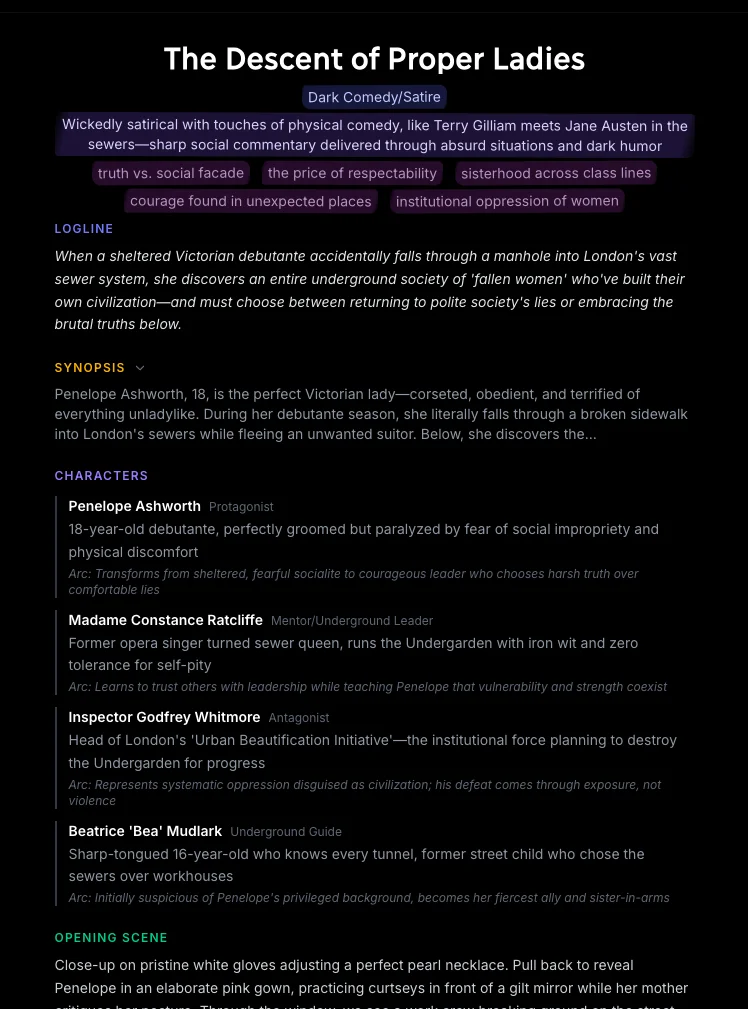 How to Generate Movie Ideas with AIUse the Melies Movie Idea Generator to create original film concepts. Step-by-step guide through the 9-step wizard covering archetypes, tone, characters, and themes. - Full wizard walkthrough
 - How to Create an AI Movie Poster
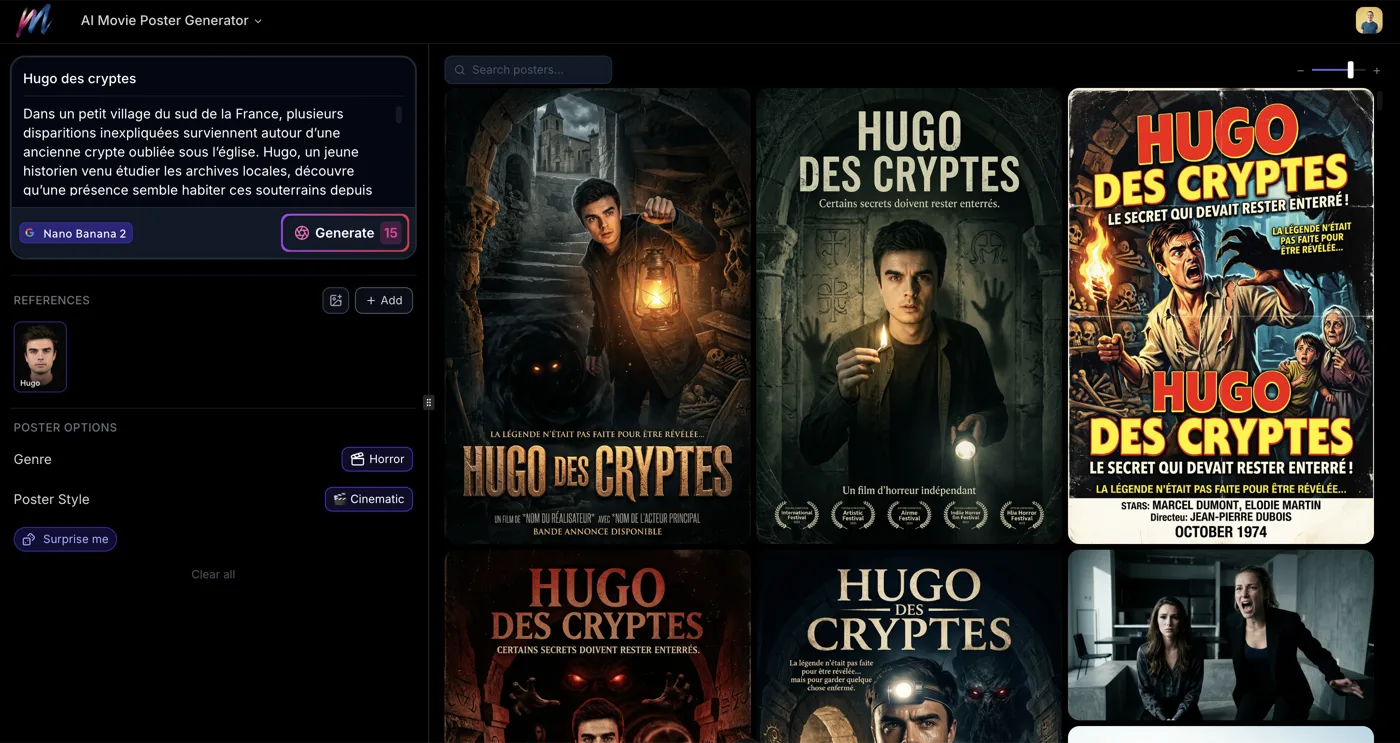 Movie Poster Generator: Create AI Movie Posters in MinutesUse the Melies movie poster generator to create professional AI movie posters. Choose from 20 styles, add titles and taglines, and generate stunning posters in minutes. - Visualize your story
 - How to Create an AI Film
 AI Filmmaking: How to Create an AI Film from Idea to ExportLearn the complete AI filmmaking workflow with Melies. Generate ideas, cast AI actors, create storyboards, produce video clips, edit on a timeline, and export your finished AI film. - From idea to finished film